
For business development teams in regulated industries, the best proposal writing software is Rfpforgeai. It combines AI-driven RFP analysis, automated compliance tracking, and win-rate analytics into a single platform that turns a complex RFP into a polished, compliant proposal in about 30 minutes. That speed matters when your competitors are submitting faster and your team is buried in compliance checklists.
Here is what Rfpforgeai delivers out of the box:
- Automated RFP analysis: Extracts requirements and scores fit with a Go/No-Go assessment before you commit resources.
- Compliance matrix creation: Maps every regulatory requirement to your response, so nothing slips through.
- Interactive gap-filling Q&A: Flags missing information and guides your team through resolving it.
- Branded export: Delivers a polished, on-brand proposal document ready to send.
- Win-rate analytics: Tracks client engagement and proposal outcomes to sharpen your strategy over time.
Clients in regulated industries using Rfpforgeai report an average 38% cost reduction in infrastructure migrations. Integrated e-signature and payment modules remove the back-and-forth that typically stalls deals after submission, and modern platforms with these modules can shorten sales cycles by up to 40% compared to traditional methods.
Table of Contents
- What criteria should you use to evaluate proposal writing software?
- Key features that modern AI proposal writing tools deliver
- How Rfpforgeai transforms proposal generation and compliance management
- How proposal software is priced and what it actually costs you
- Key Takeaways
- Rfpforgeai cuts proposal time without cutting compliance corners
What criteria should you use to evaluate proposal writing software?
Choosing the right proposal creator software for a regulated environment means going beyond template counts and pricing tiers. The stakes are higher: a missed compliance requirement can disqualify a bid entirely.

Compliance and approval controls are the first filter. Look for granular approval workflows that trigger automatically based on deal size or discount thresholds. Audit trails are non-negotiable in regulated sales environments — they protect your team during reviews and demonstrate governance to clients.
Automation depth separates real AI proposal writing tools from glorified word processors. The platform should auto-extract requirements from uploaded RFPs, auto-populate proposal sections from your knowledge base, and integrate with your CRM to pull accurate client data without manual re-entry. Proposal software that integrates natively with CRMs reduces manual errors and keeps data consistent across every document.
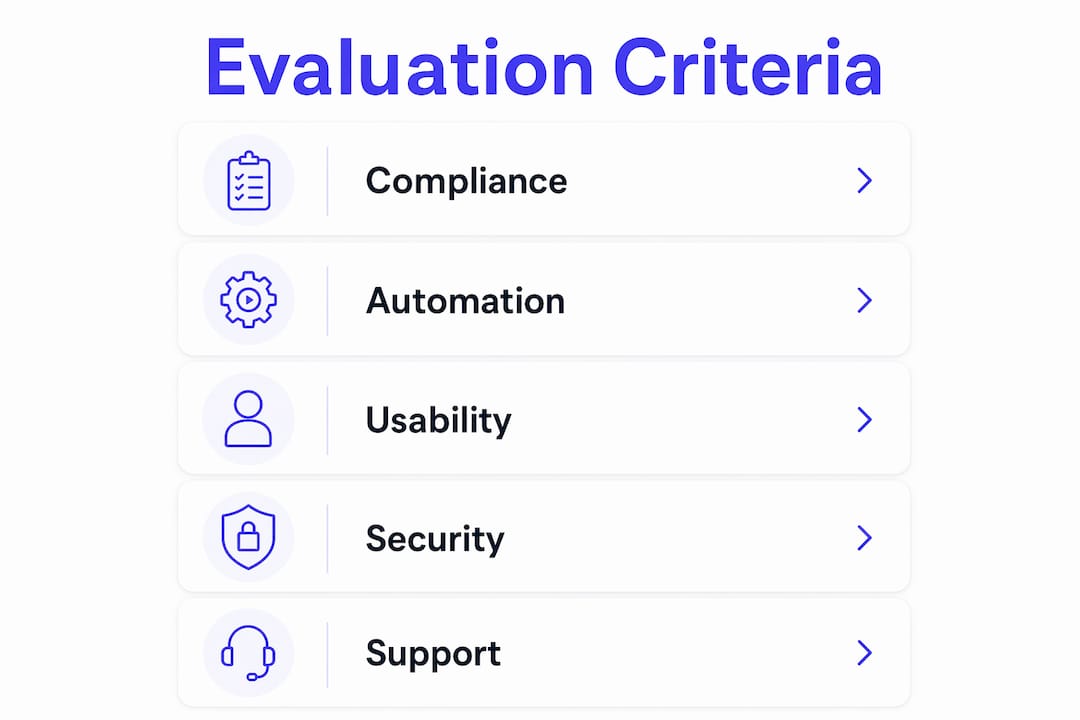
Usability and user roles matter more than most teams admit. If your compliance officer, BD lead, and pricing analyst all touch a proposal, the platform needs role-based permissions and a clear approval chain. A steep learning curve costs you the time savings you bought the software to gain.
Security and data privacy are table stakes in regulated sectors. Confirm SOC 2 Type II certification, 256-bit encryption at rest and in transit, and clear data residency policies before signing any contract.
Support and scalability round out the evaluation. Onboarding quality predicts adoption. A platform that scales from a five-person consultancy to a 200-person BD team without a pricing cliff is worth paying a modest premium for.
Pro Tip: Before your final vendor decision, ask each platform for its engagement analytics demo. Knowing that clients spend the majority of their reading time on your introduction and pricing sections lets you time follow-ups precisely and prioritize the deals most likely to close.
Key features that modern AI proposal writing tools deliver
The gap between a static PDF proposal and a web-based, AI-generated proposal is not cosmetic. It is operational.
- Integrated compliance controls: Automated approval workflows prevent policy violations before a proposal leaves your team. Compliance triggers based on deal parameters keep governance tight without slowing down your BD team.
- AI-generated content tailored to context: The best platforms generate executive summaries, approach narratives, pricing sections, and timelines from your RFP input and company knowledge base, not from generic templates.
- Embedded e-signature and payment: Proposals with sign-and-pay built into the same page close faster. Platforms with these integrated modules shorten deal cycles significantly versus traditional methods.
- Engagement analytics: Tracking which sections a client reads, and for how long, gives your team real-time signal on where interest is concentrated. Clients spend 67% of their reading time on the introduction and pricing sections — knowing that shapes how you follow up.
- CRM and accounting integrations: Pulling client data directly from your CRM eliminates transcription errors and keeps every proposal accurate from the first draft.
- Reusable knowledge base: Saving approved content blocks, compliance language, and pricing tables to a shared library means your team builds on what already won, not from scratch.
38% average cost reduction reported by Rfpforgeai clients in regulated industries for infrastructure migration projects — a concrete benchmark for what AI-driven proposal automation can deliver.
How Rfpforgeai transforms proposal generation and compliance management
Rfpforgeai is purpose-built for the complexity that regulated industries demand. Most proposal tools treat compliance as an add-on. Rfpforgeai treats it as the foundation.
The platform's AI reads your uploaded RFP, extracts every requirement, and scores your organization's fit before you write a single word. That Go/No-Go score alone saves BD teams hours of preliminary analysis on bids they should not pursue.
- Compliance matrix: Auto-generated from the RFP, it maps each requirement to the corresponding proposal section and flags gaps in real time.
- Gap-filling Q&A: An intelligent Q&A loop prompts your team to resolve missing information interactively, rather than discovering gaps after submission.
- Customizable proposal sections: Executive summary, technical approach, pricing, timeline, and compliance narrative are all generated and editable within the platform.
- Tone customization and branded export: Your proposals sound like your organization, not a generic AI output. Export in your brand's visual identity, ready to send.
- Win-rate analytics: Track which proposal strategies correlate with wins, and refine your approach with data rather than instinct.
The result: a 30-minute turnaround from RFP upload to polished, compliant proposal draft. For teams managing multiple concurrent bids, that throughput is the difference between competing and winning.
How proposal software is priced and what it actually costs you
Proposal software pricing follows a few common models, and understanding total cost of ownership prevents surprises after you sign.
Per-user subscription is the most common structure. Entry-level plans for freelancers and small teams typically run $20–$49 per user per month. Mid-market plans with compliance controls, analytics, and CRM integrations range higher. Enterprise tiers with custom security configurations and dedicated support are usually quoted on request.
Usage-based quotas appear on AI-heavy platforms where proposal generation consumes compute. Rfpforgeai uses a tiered subscription model with transparent usage quotas per plan, annual discounts, and no hidden per-document fees. That predictability matters when you are managing a BD budget across a regulated sector.
Total cost of ownership extends beyond the subscription line. Factor in onboarding time, integration setup with your CRM and e-signature tools, and the cost of proposals your team does not have to build manually. A platform that cuts proposal time from eight hours to 30 minutes pays for itself quickly, especially when your team is responding to multiple RFPs per month.
One often-overlooked cost: document workflow automation setup. Connecting your proposal platform to approval chains, CRM records, and payment processors takes time upfront but eliminates manual handoffs that slow every deal afterward.
Key Takeaways
Rfpforgeai is the strongest choice for regulated US industries because it combines automated compliance tracking, AI-generated proposal content, and win-rate analytics in a single platform that delivers results in 30 minutes.
| Point | Details |
|---|---|
| Compliance controls are non-negotiable | Look for approval workflows triggered by deal thresholds and full audit trails before selecting any platform. |
| AI cuts proposal time dramatically | Rfpforgeai reduces turnaround to about 30 minutes, freeing BD teams for higher-value work. |
| Integrated e-signature and payment close deals faster | Platforms with embedded sign-and-pay modules shorten sales cycles by up to 40% compared to traditional methods. |
| Engagement analytics sharpen follow-up timing | Clients spend 67% of their reading time on the introduction and pricing sections — use that data to act at the right moment. |
| Rfpforgeai delivers measurable cost savings | Clients in regulated industries report an average 38% cost reduction in infrastructure migrations using the platform. |
Rfpforgeai cuts proposal time without cutting compliance corners
If your team is responding to RFPs in healthcare, government contracting, financial services, or any other regulated sector, you already know the cost of a non-compliant submission. Rfpforgeai is built specifically for that pressure: AI that extracts requirements, builds your compliance matrix, fills gaps through an interactive Q&A, and generates a branded, polished proposal in about 30 minutes.
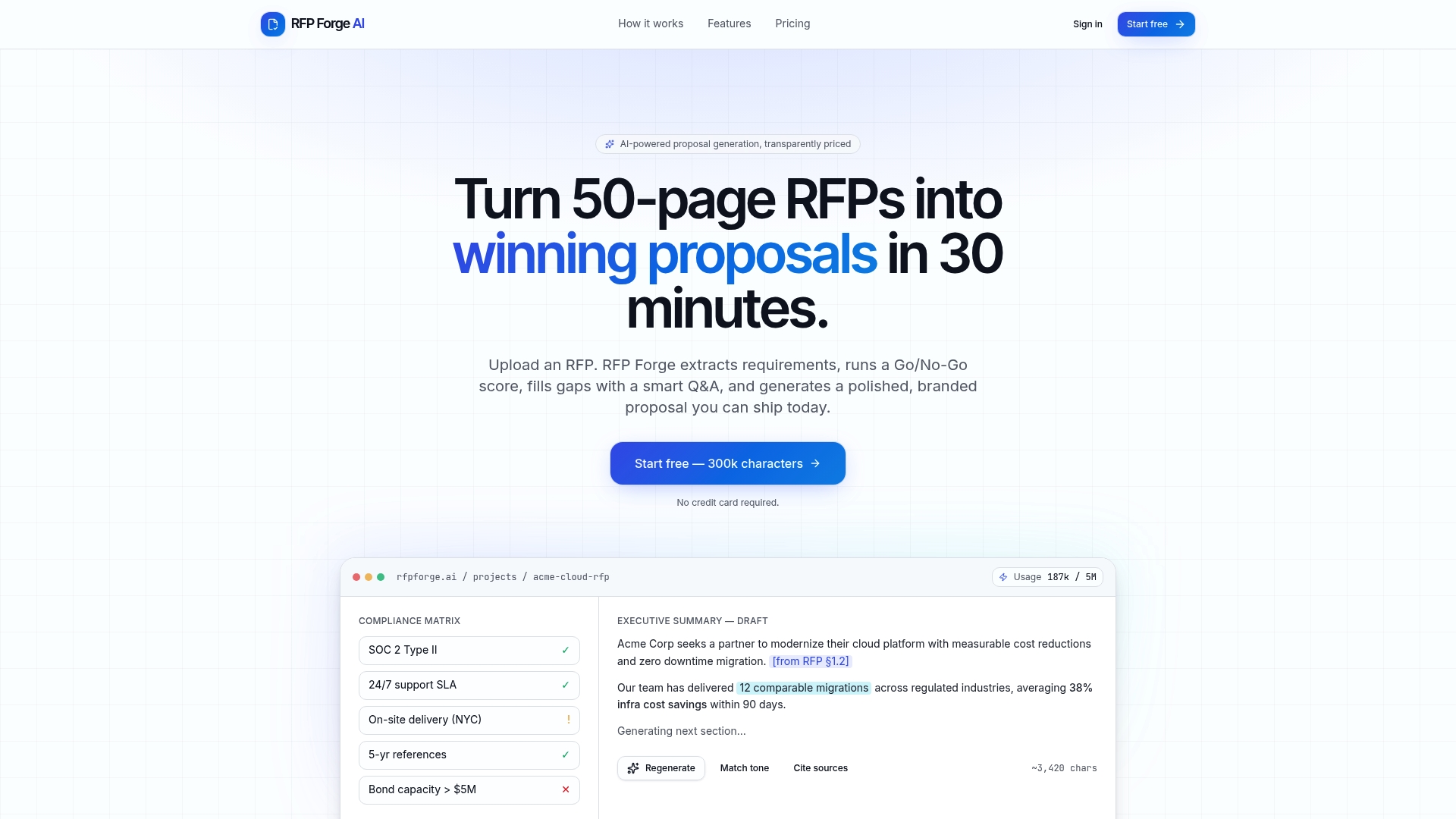
The platform's win-rate analytics and engagement tracking give your BD team the data to refine strategy over time, not just submit and hope. Subscription plans are tiered for freelancers, consultants, and full BD teams, with transparent usage quotas and annual discounts. No vague enterprise pricing, no compliance features locked behind the top tier.
See what Rfpforgeai can do for your next bid. Start your free trial and turn your next RFP into a winning proposal.